Materials as Memory
Silver, gold, and bronze do not behave the same way, and we do not treat them as if they did.
Silver is cool and exacting — it holds a sharp edge and a clean reflection, and it asks to be handled with precision. Gold is warmer and more forgiving, the metal of continuity, traditionally chosen for things meant to be passed down rather than replaced. Bronze carries its history visibly; it oxidises, it changes colour over years of wear, recording time on its own surface in a way the other two metals resist.
We choose a material the way we choose a setting for a story — not for its market value, but for what it is honestly capable of communicating. A piece about a quiet departure rarely calls for gold's warmth. A piece about endurance often does.
The Memory of Metal
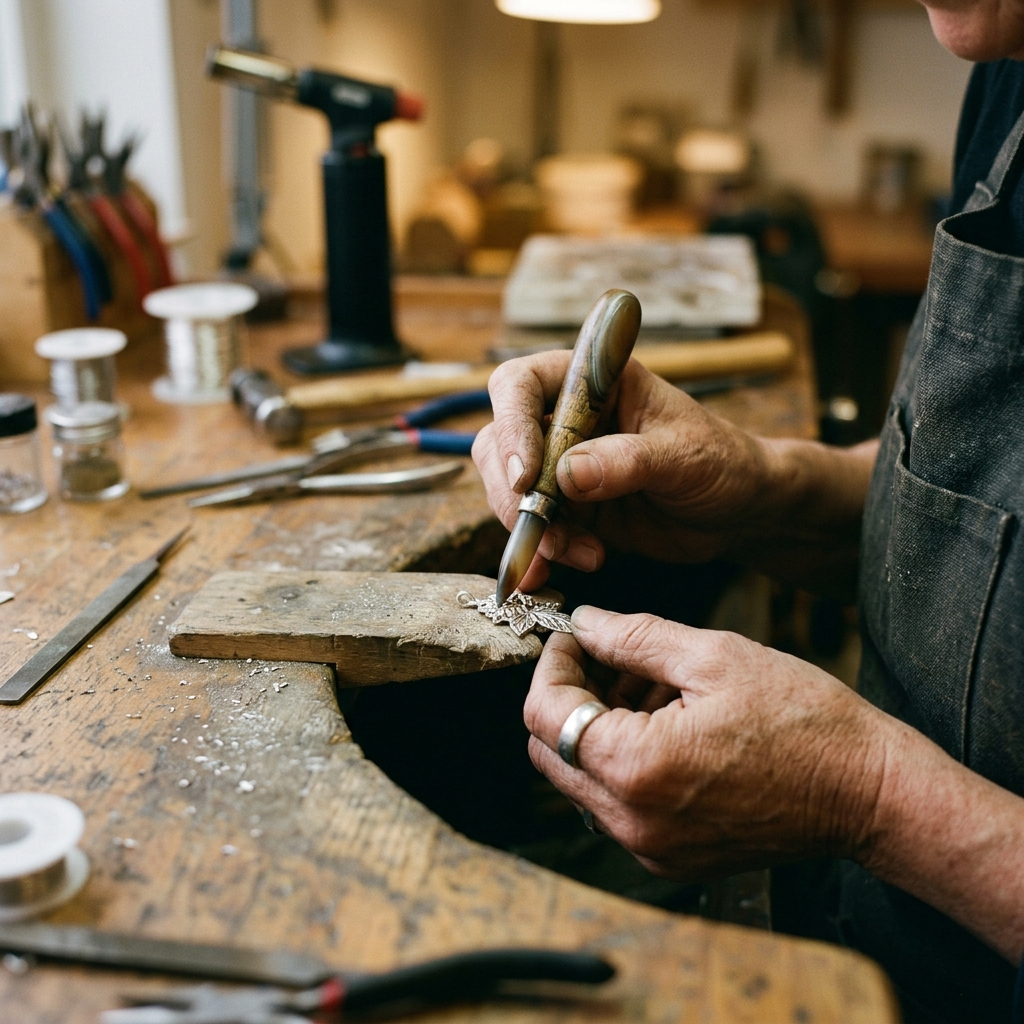
Metal is not a passive canvas. Silver is an active collaborator, possessing memory, mood, and limits. When subjected to intense heat and the rhythmic pressure of the hammer, it reacts, remembers, and holds its form. It records every choice made in the quiet of the atelier.
This is why we do not begin with a material and ask what it can become. We begin with a story and ask which material is honest enough to carry it.
The Lost-Wax Discipline
Every piece we craft relies on the ancient discipline of lost-wax casting — a technique preserved across millennia, beginning with a hand-carved scale model in jewellers' wax. The tactile nature of wax carving allows the craftsman to refine each edge, softening computational precision with natural warmth.
Once cast, the piece faces the crucible of finishing. We choose not to erase the toolmarks entirely. They tell the story of creation — physical proof of a dedicated human hand, working in the same tradition as the silversmiths our founder grew up watching in Istanbul.
None of this is hidden symbolism intended only for the initiated. It is simply how we think before a single sketch exists.